 Português
 Русский
 Español
 Francés
 ไทย
ไทย
 Bahasa Indonesia
 Việt
Việt
 Türk
Türk
 Melayu
 العربية

Differences Between Single-Screw and Twin-Screw Extruders
Single-screw and twin-screw extruders exhibit significant differences in structure, operating principles, and application scenarios. Single-screw extruders feature a relatively simple structure, with the core component being a single helical screw housed within a cylindrical barrel. During operation, the screw rotates to push the material forward. The material gradually softens and melts under the combined effects of barrel heating and screw shearing, and is ultimately extruded through a die to form the desired shape. Since the material is transported and plastified solely by the friction between the screw and the barrel, its mixing capability is relatively weak. It is suitable for processing materials with a single component and good flowability, such as polyethylene (PE) and polypropylene (PP). In the production of conventional plastic products such as films, pipes, and sheets, single-screw extruders are widely used due to their low cost and ease of operation.
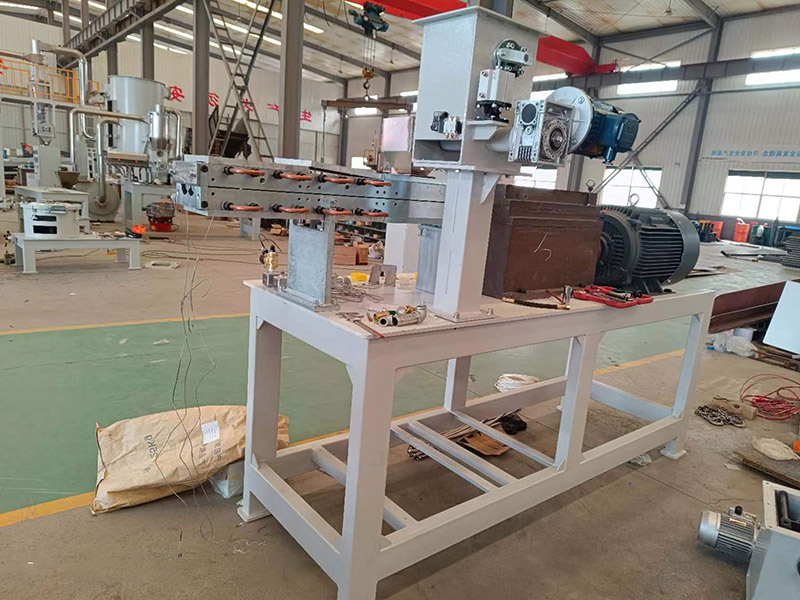
In contrast, twin-screw extruders are equipped with two intermeshing or non-intermeshing screws, which can be classified into two types based on their rotation direction: co-rotating and counter-rotating. In co-rotating twin-screw extruders, the two screws rotate synchronously. The meshing area between the screws generates strong shear forces and self-cleaning effects. The material is not only pushed axially by the screws but also flipped and mixed in the screw gaps, resulting in excellent dispersion and mixing capabilities. This makes them suitable for complex processes requiring the addition of large amounts of fillers, fibers, or multiple raw materials. Contra-rotating twin-screw extruders, on the other hand, are suitable for processing high-viscosity, heat-sensitive materials (such as polyvinyl chloride PVC) due to the longer residence time of the material in the meshing zone. Their forced conveying characteristics prevent material from stagnating and decomposing inside the barrel.
In terms of performance parameters, the length-to-diameter ratio (L/D) of single-screw extruders typically ranges from 20 to 30, with relatively low screw speeds (generally not exceeding 150 rpm), resulting in limited production efficiency. However, due to their low shear rates, they exert minimal thermal-mechanical stress on materials, making them suitable for temperature-sensitive materials. The length-to-diameter ratio of twin-screw extruders can reach 40 or higher, with screw speeds generally ranging from 200 to 600 rpm. Through high-speed rotation and strong shear action, they can significantly enhance production capacity and mixing efficiency. However, excessively high speeds may cause material overheating, necessitating the use of an efficient cooling system. Additionally, twin-screw extruders are more complex in structure and have higher manufacturing costs, resulting in equipment prices that are typically 2-3 times that of single-screw extruders. Maintenance and upkeep are also relatively more cumbersome.
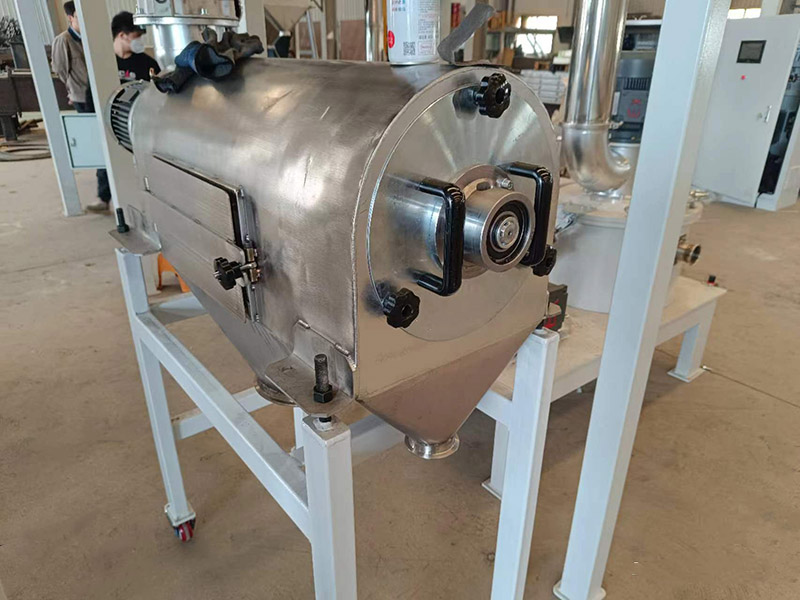
In practical applications, both types of extruders have their advantages. For producing ordinary plastic products, such as plastic bags and mineral water bottle preforms, single-screw extruders can meet requirements at a lower cost; however, in scenarios requiring thorough mixing, such as plastic alloy preparation and recycled plastic pelletization, twin-screw extruders are the preferred choice due to their excellent dispersion and adaptability. The selection of an extruder should consider factors such as material properties, product requirements, and production costs to achieve optimal production efficiency and economic benefits.


