 Português
 Русский
 Español
 Francés
 ไทย
ไทย
 Bahasa Indonesia
 Việt
Việt
 Türk
Türk
 Melayu
 العربية

Powder mixing equipment: how to ensure uniformity?
In powder metallurgy, chemical, pharmaceutical, food and other industries, powder mixing is a key process link, mixing uniformity directly affects the performance and quality of the final product. Different powder mixing equipment uses different working principles, but the core objective is to achieve a highly uniform distribution of powders of different compositions.
Common powder mixing equipment and working principle
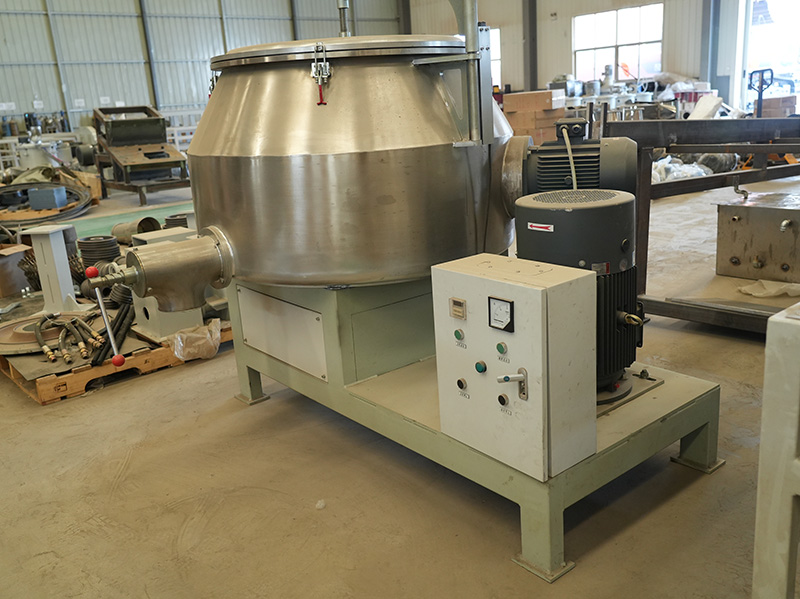
At present, the powder mixing equipment commonly used in the industry mainly includes V-type mixer, three-dimensional mixer, double cone mixer and screw belt mixer, etc. V-type mixer through the container is V-shaped design, in the process of rotation, so that the powder is constantly divided into a combination, to achieve the diffusion of mixing. It has the advantages of simple structure, easy to clean, and is suitable for powder with good fluidity. Three-dimensional mixer is a more complex movement, so that the container in three-dimensional space for multi-directional movement, the mixing effect is more uniform, especially for the specific gravity of the difference between the powder mixing. Double cone mixer container shape for the double cone, rotating powder in the role of gravity constantly rolling, suitable for shear-sensitive materials. The spiral belt mixer is forced to mix through the stirring effect of the internal spiral belt, suitable for viscous or need high shear mixing powder.
Key factors affecting mixing uniformity
The physical properties of the powder, such as particle size, density, shape and surface characteristics, all affect the mixing effect. If the density of the powder varies greatly, it is prone to segregation during the mixing process, resulting in an uneven distribution of ingredients. In addition, particle shape affects flowability, which in turn affects mixing efficiency. Mixing time is also an important parameter. Too short a time may result in inadequate mixing, while too long a time may result in particle breakage or re-separation due to over-mixing. The choice of rotational speed is also critical, too high a speed may make the powder due to centrifugal force attached to the wall of the container, but reduce the mixing effect.
How to optimize the mixing process?
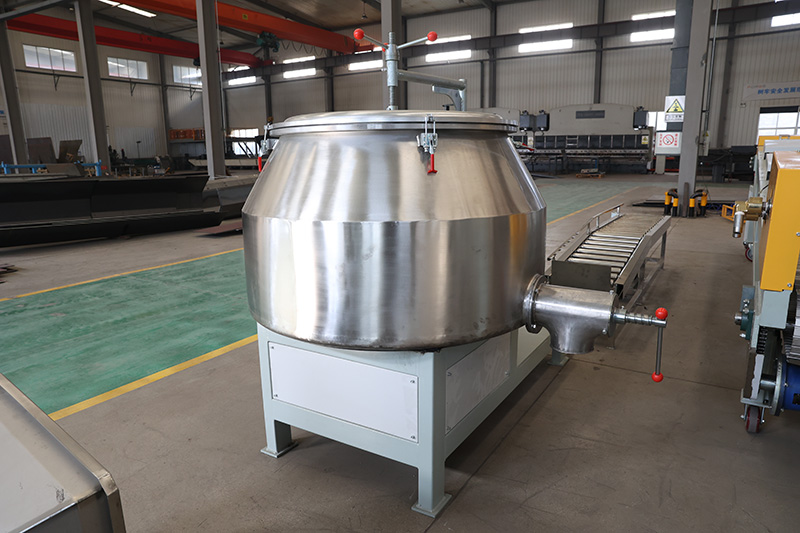
In order to ensure mixing uniformity, it is usually necessary to conduct small-scale tests before production to determine the optimal mixing time, rotational speed and loading volume. For example, for powders that are prone to static electricity, the rotational speed can be appropriately reduced or a small amount of flow aid can be added to minimize particle agglomeration. For powders with large differences in density, a stepwise mixing strategy can be used, i.e., mixing at a low speed first to make the heavy particles dispersed, and then increase the speed to make the light particles uniformly distributed. In addition, the internal structure design of the mixing equipment is also very important, such as increasing the baffle plate or mixing blade can enhance the convection mixing effect and reduce the dead space.


