 Português
 Русский
 Español
 Francés
 ไทย
ไทย
 Bahasa Indonesia
 Việt
Việt
 Türk
Türk
 Melayu
 العربية

Powder Production Equipment Common Troubleshooting Guide
Powder production equipment may encounter a variety of faults during operation, affecting production efficiency and product quality. The following are some common failures and their elimination methods to help operators quickly solve the problem and restore the normal operation of the equipment.
First, powder production decline
Powder production decline is one of the most common failures of powder production equipment. The causes of this problem may be insufficient supply of raw materials, equipment parameters are not set properly, equipment parts wear and tear. Elimination methods include: checking the raw material supply system to ensure that the supply of raw materials is sufficient; adjust the equipment parameters, such as feed speed, crushing pressure, temperature, etc., to optimise the production process; check the equipment components, such as crushing blades, screens, etc., and timely replacement of worn parts.
Second, uneven powder size
Uneven powder size will affect the performance and application of the product. The causes of this problem may be classification system failure, poor crushing effect, changes in the nature of raw materials. Elimination methods include: check the classification system, such as air classifier, vibrating screen, etc., to ensure its normal operation; adjust the crushing parameters, such as crushing time, speed, etc., to improve the crushing effect; analyse the nature of the raw material, such as particle size, humidity, etc., and if necessary, pretreatment.
Third, abnormal equipment vibration
abnormal equipment vibration will affect the service life of the equipment and production safety. Causes of this problem may be unbalanced equipment installation, bearing damage, loose parts. Elimination methods include: check the installation of equipment, adjust the ground bolts to ensure that the level of equipment; check the bearings, if necessary, to replace the bearings; check the connection of equipment components, tighten the loose parts.
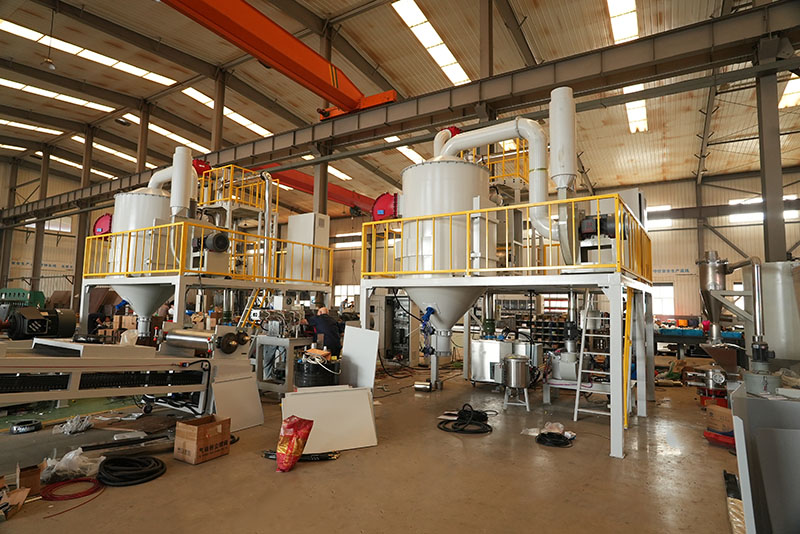
Fourth, equipment temperature is too high
equipment temperature is too high will lead to equipment damage and safety hazards. The causes of this problem may be cooling system failure, excessive friction, overload operation. Elimination methods include: check the cooling system, such as cooling water circulation, fans, etc., to ensure that it works properly; check the lubrication of the equipment, add lubricant in a timely manner; to avoid overloaded operation of the equipment, and rationalise the production tasks.
Fifth, equipment noise
equipment noise not only affects the working environment, may also be a sign of equipment failure. Causes of this problem may be parts wear and tear, loose, resonance and so on. Elimination methods include: check the equipment components, such as gears, belts, etc., timely replacement of worn parts; fasten loose parts; analyse the source of the noise, take sound insulation measures or adjust the structure of the equipment.
Sixth, other failures
In addition to the above common failures, powder production equipment may also have other failures, such as electrical system failures, control system failures and so on. The operator should analyse the situation according to the specific circumstances, find out the cause of the failure and remove it.
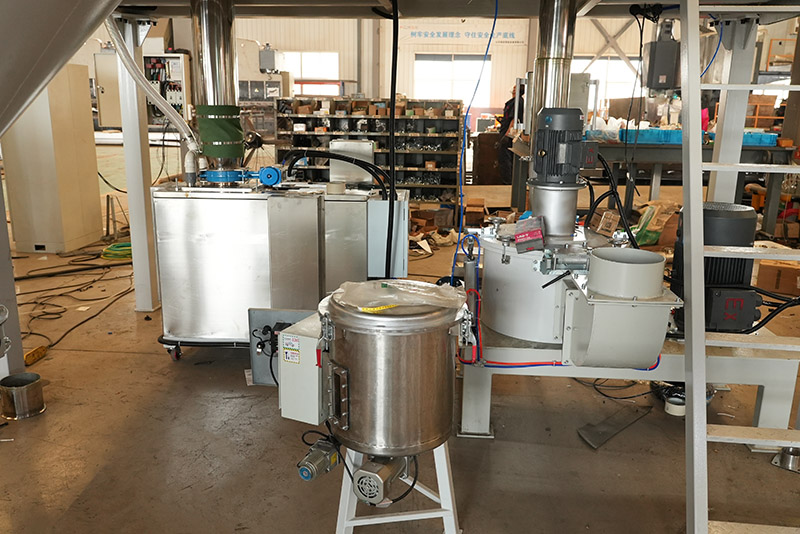
Troubleshooting Precautions
The operator should be familiar with the structure and principle of the equipment, and have certain troubleshooting and diagnostic capabilities.
* Before troubleshooting, the power supply should be cut off to ensure safety.
* Use appropriate tools and instruments for troubleshooting and elimination.
* For the failure that can not be eliminated, should contact the professional maintenance personnel in time to deal with.
Summary
The troubleshooting of common failures of powder production equipment requires operators to have certain professional knowledge and skills. Through regular maintenance, correct operation of the equipment and timely troubleshooting, you can effectively extend the service life of the equipment, improve production efficiency and product quality.


