 Português
 Русский
 Español
 Francés
 ไทย
ไทย
 Bahasa Indonesia
 Việt
Việt
 Türk
Türk
 Melayu
 العربية

Research on Fault Diagnosis and Rapid Repair Methods of Powder Production Equipment
In the powder production industry, the stable operation of equipment is crucial for production efficiency and product quality. Once equipment failure occurs, it will not only lead to production stagnation, but also may cause a series of problems such as the waste of raw materials and cost increase. Therefore, in-depth study of powder production equipment fault diagnosis and rapid repair methods are of great practical significance.
Common powder production equipment failure can be divided into mechanical failure, electrical failure and process failure. Mechanical failure, bearing wear is more frequent, long time high load operation will make the bearing ball or raceway fatigue wear, triggering equipment vibration, noise increase. For example, in the crusher, if the bearing is damaged, the crushing effect will be greatly reduced, and even material jamming phenomenon. Electrical failure, motor burnout is more difficult. Motor overload operation for a long time, poor heat dissipation or short circuit electrical wiring, etc., may lead to motor winding overheating burned, resulting in equipment can not run. Process failures are often manifested in product particle size does not meet the requirements, which may be due to the grading efficiency of the classifier declines, the internal blade wear or clogging, affecting the accuracy of the powder classification.
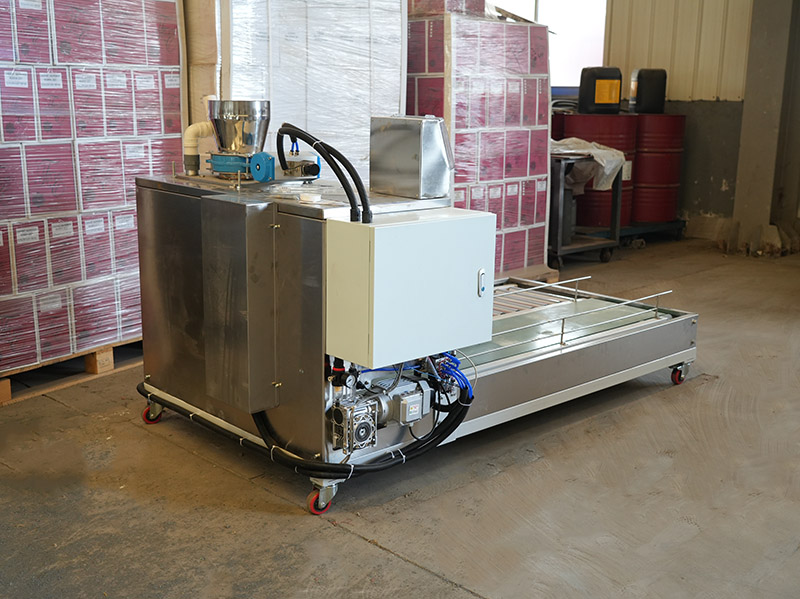
In order to achieve accurate diagnosis of faults, a variety of methods are widely used. Vibration analysis is one of them, through the installation of vibration sensors in key parts of the equipment, to collect vibration signals when the equipment is running. Normal operation of the equipment vibration signal has a specific frequency and amplitude range, when there is a failure, the characteristics of the vibration signal will change. Such as bearing failure, the vibration spectrum will appear and bearing failure characteristics of frequency-related peaks. Oil analysis method is also very effective, regular collection of oil samples in the equipment lubrication system, the use of spectral analysis, iron spectrum analysis and other means of detecting wear particles in the oil composition, size and concentration and other information. If the metal particles in the fluid content is abnormally high, it can be deduced that there is excessive wear of components within the equipment.
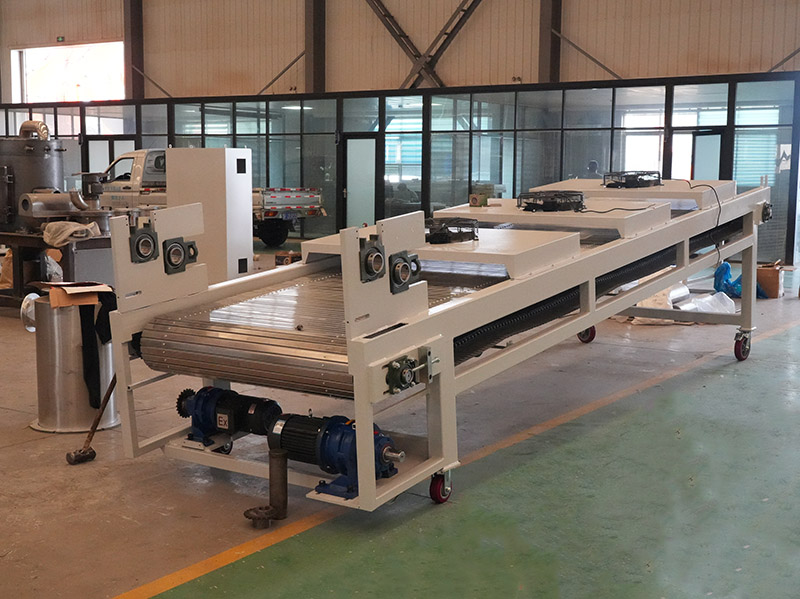
When the fault diagnosis is clear, rapid repair methods are crucial. For simple mechanical faults, such as belt slack, on-site adjustments can be made directly to re-tension the belt and ensure normal transmission of the equipment. For complex electrical failures, such as motor burnout, maintenance personnel need to quickly replace the spare motor to shorten the repair time. At the same time, the establishment of a perfect equipment maintenance knowledge base and fault case library is of great significance, the previous failure phenomenon, diagnosis process and maintenance methods recorded in detail, so that when encountering similar failures in the future, the maintenance personnel can quickly access the reference to improve the maintenance efficiency.
In the process of powder production equipment operation, through accurate fault diagnosis methods to find problems in time, and the use of efficient and rapid maintenance means to solve the problem, in order to protect the stable operation of the equipment, to maintain the high efficiency and quality of powder production


