 Português
 Русский
 Español
 Francés
 ไทย
ไทย
 Bahasa Indonesia
 Việt
Việt
 Türk
Türk
 Melayu
 العربية

Analysis of common powder production faults: clogging, uneven particle size, high energy consumption
In the process of powder production, material clogging, uneven particle size and high energy consumption are the three most common production faults, these problems not only affect the production efficiency, but also lead to unstable product quality. Plugging usually occurs in the equipment conveying or discharging link, may be caused by the material humidity, poor fluidity or equipment design is not reasonable. When the powder contains more fines or fibre components, it is more likely to form a blockage in the pipe elbow, screen mesh and other parts. The key to solving this problem is to optimise the material pre-treatment process, such as increasing the drying process to reduce the moisture content, or installing vibration devices or air cannons in the position of easy to block the material. At the same time, regularly check the internal structure of the equipment to ensure that the flow channel design is reasonable, to avoid dead ends or narrow channels.
Uneven particle size problems often stem from improper control of the crushing or classification process. In the crushing process, if the equipment parameters are not set properly, such as severe hammer wear or unstable speed of the grading wheel, it will lead to uneven size of powder particles. Inefficient grading system can also result in mixing of coarse and fine particles, affecting the particle size distribution of the final product. To solve this problem, it is necessary to regularly check the wear and tear of the crushing parts and replace the wear parts in time. At the same time, optimise the operating parameters of the classifying equipment to ensure the stability of the airflow speed and the rotational speed of the classifying wheel. For demanding application scenarios, you can consider adding a secondary classification process, or using online particle size analyser real-time monitoring, timely adjustment of process parameters.
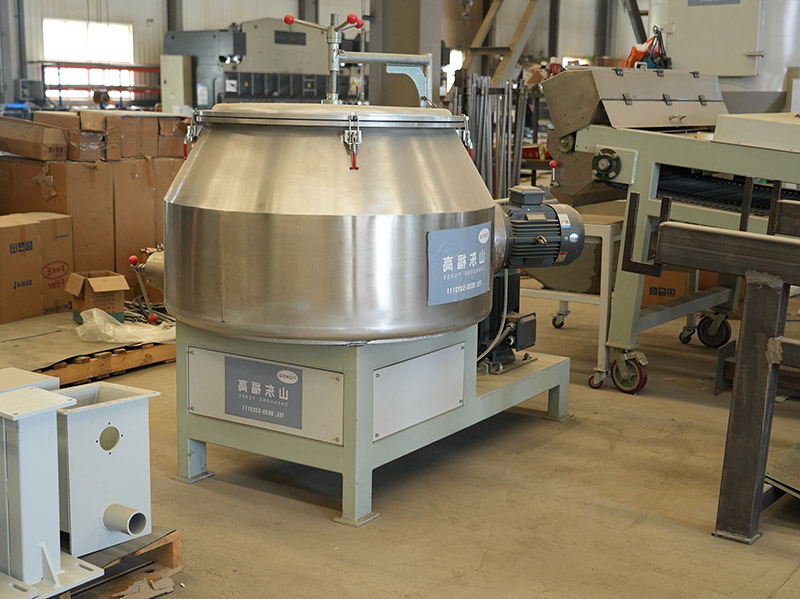
High energy consumption is another prominent problem in powder production, which not only increases the production cost, but also affects the enterprise's environmental indicators. There are many reasons for high energy consumption, including aging equipment, unreasonable process parameters, poor system matching and so on. For example, some production lines in order to pursue the output, will increase the speed of the crusher, but this often leads to a significant increase in energy consumption, while the improvement of crushing efficiency is very limited. Solving this problem requires optimising the energy efficiency configuration of the entire production line from a system perspective. You can consider the use of frequency conversion technology, according to the actual production demand to adjust the power of the equipment; or improve the hot air system, improve the thermal energy utilisation. In addition, regular maintenance of equipment, keeping bearings well lubricated and belt tension appropriate can effectively reduce energy consumption.
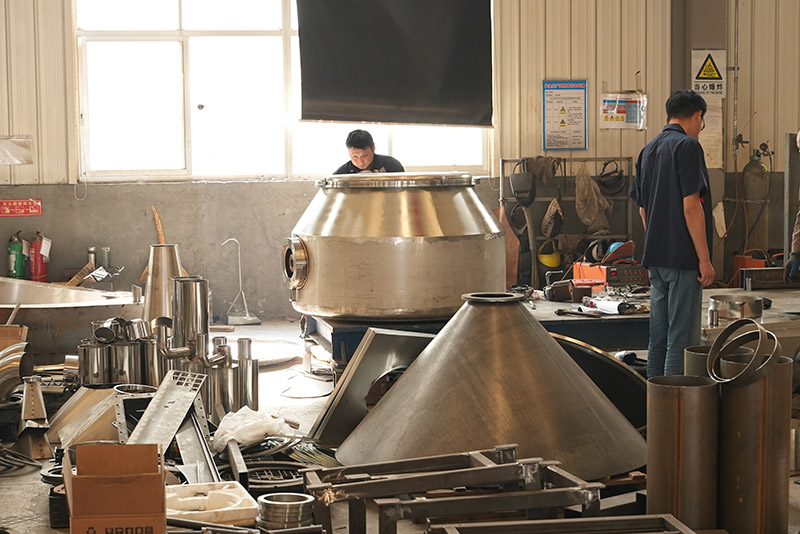
There is often an interplay between these three issues. For example, clogging can lead to production interruptions, and frequent starting and stopping of equipment will increase energy consumption; while uneven particle size products may require rework, again resulting in energy waste. Therefore, when dealing with these problems, a systematic solution is needed. The establishment of a perfect production monitoring system is the key, through the real-time collection of equipment operating data, you can find abnormalities and take measures in a timely manner. At the same time, it is also important to strengthen the training of operators so that they can accurately determine the causes of faults and take the correct treatment.


