 Português
 Русский
 Español
 Francés
 ไทย
ไทย
 Bahasa Indonesia
 Việt
Việt
 Türk
Türk
 Melayu
 العربية

Powder Equipment Cleaning and Maintenance: Practical Tips to Extend the Service Life
Powder equipment in the long-term use of the process, if the lack of effective cleaning and maintenance, will not only affect the production efficiency and product quality, but also shorten the service life of the equipment. Mastering the practical cleaning and maintenance skills can keep the powder equipment in good running condition at all times.
After daily use, it is important to clean the surface of the equipment and the internal residual powder in a timely manner. Residual powder is easy to adsorb moisture, dust, forming lumps, corrosion of internal parts of the equipment, resulting in transmission parts jammed, and even clogging pipes and screens. For open powder mixer, granulator and other equipment, after each use, should be used first dry soft brush or vacuum cleaner to remove the visible powder, avoid the use of compressed air blowing, to prevent the powder from lifting into the equipment after the precision parts of the gap. Like vibrating screen this kind of equipment, the screen mesh is easy to be blocked by fine powder, can be used soft rubber hammer gently knock the screen frame, let the blocked powder off, and then use the special screen cleaning brush to clean up the screen surface, restore the screening efficiency.
Regular deep cleaning of the equipment can effectively remove stubborn stains and residual impurities. For the corners and pipes inside the powder equipment that are hard to reach, disassembly cleaning can be used. Such as powder conveying pipeline, in the case of stopping and ensuring safety, dismantle it in sections, rinse the inner wall with high-pressure water gun together with special cleaner, dry it with clean rag after rinsing, and apply antirust oil to prevent rusting. For contact with the material mixing paddle, granulation knife head and other key components, need to be immersed in a neutral detergent solution, wipe the surface adhesion with a soft cloth, prohibited the use of steel wire balls and other hard tools, so as not to scratch the surface coating of the components, affecting its corrosion resistance and service life.
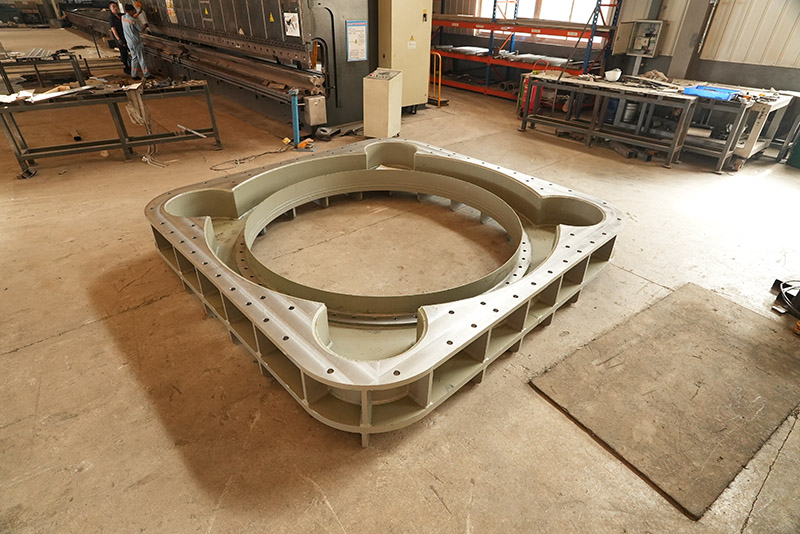
Equipment lubrication and maintenance should not be ignored. Transmission belt, gear box, bearings and other moving parts, if the lack of lubrication, friction will be exacerbated by the production of large amounts of heat, accelerate the wear and tear of parts, and even lead to equipment failure. According to the instruction manual of the equipment, regularly add the appropriate lubricant or grease for each lubrication point. For example, the bearing part needs to be supplemented with high-temperature grease every 200 hours of operation, and the old grease and impurities should be removed before adding to ensure that the new grease gives full play to its function; the gear box needs to be replaced with lubricating oil every six months, and the box should be thoroughly cleaned when changing the oil to avoid the residual impurities from contaminating the new oil.
The electrical control system is the “brain” of the powder equipment, and it is important to do a good job of moisture-proof, dust-proof and heat dissipation maintenance. Regularly check whether the line connection in the control cabinet is loose, clean up the dust on the circuit board to prevent short-circuit failure caused by dust. When used in humid environments, desiccant can be placed in the control cabinet, and install moisture-proof devices. At the same time, to ensure the normal operation of the equipment cooling fan, to avoid overheating of electrical components lead to performance degradation or damage.
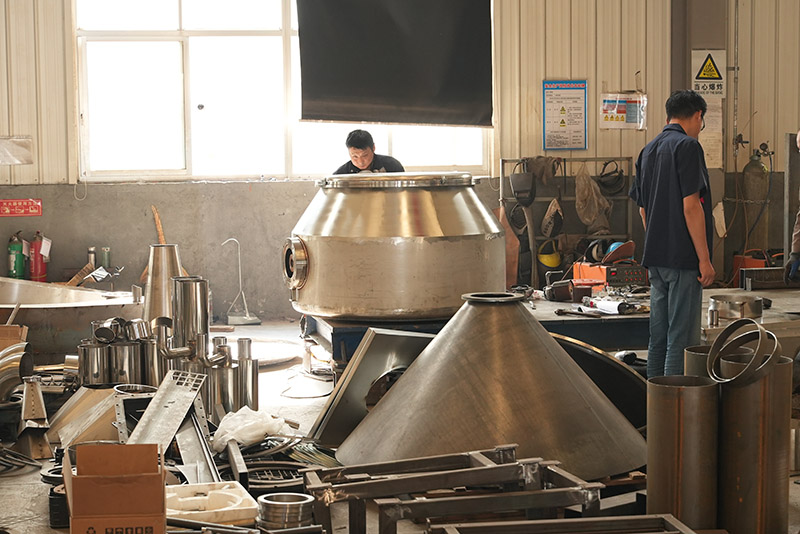
In addition, the establishment of equipment maintenance files, detailed records of each cleaning, maintenance and repair, which helps to identify potential equipment problems in a timely manner and develop targeted maintenance programs. Through scientific and systematic cleaning and maintenance, it can effectively reduce the failure rate of powder equipment, extend the service life of the equipment, save the cost of equipment replacement for the enterprise, and improve production efficiency.


